If YouTube is anything to go by, hydroponics and aquaponics are very popular in the aquarium hobby at the moment. I’m always seeing videos where people are adding monstera, pothos or peace lilies to their tanks. Some people even grow sweet potatoes in their aquariums.
These plants are all on the big side. They’d look out of place growing up out of the back of a nano tank in your living room. But there is an alternative. Smaller variants of species that can grow with their roots in water instead of soil are available.
The benefits are the same. Like larger indoor plants, they’ll absorb ammonia directly, which is in the waste your fish produce. They’ll also absorb nitrates, which occur in the water after the bacteria in your filter break down ammonia into nitrites and then nitrites into nitrates. Basically, they help filter the water for a healthier tank.
This article, and my accompanying video on YouTube, explain how to add mini houseplants to a nano fish tank based on my recent experiences.
Watch the video
How to add nano houseplants to your nano tank
Step 1
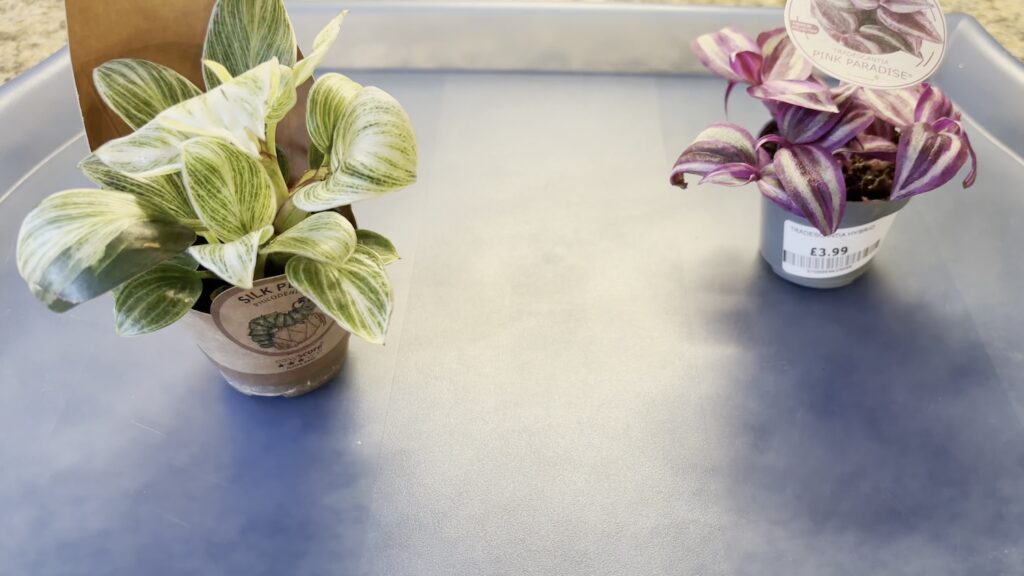
Check out the indoor plants section of your local garden centre or go online and shop around. I found a mini philodendron (silk plant) and a mini tradescantia (pink paradise) and they were only £5 and £4 respectively. Here are a couple of links to similar plants I found on Amazon.
Tradescantia pink paradise https://amzn.to/4v2bF3m
Philodendron silk plant (closest) https://amzn.to/4dXaOtZ
Step 2
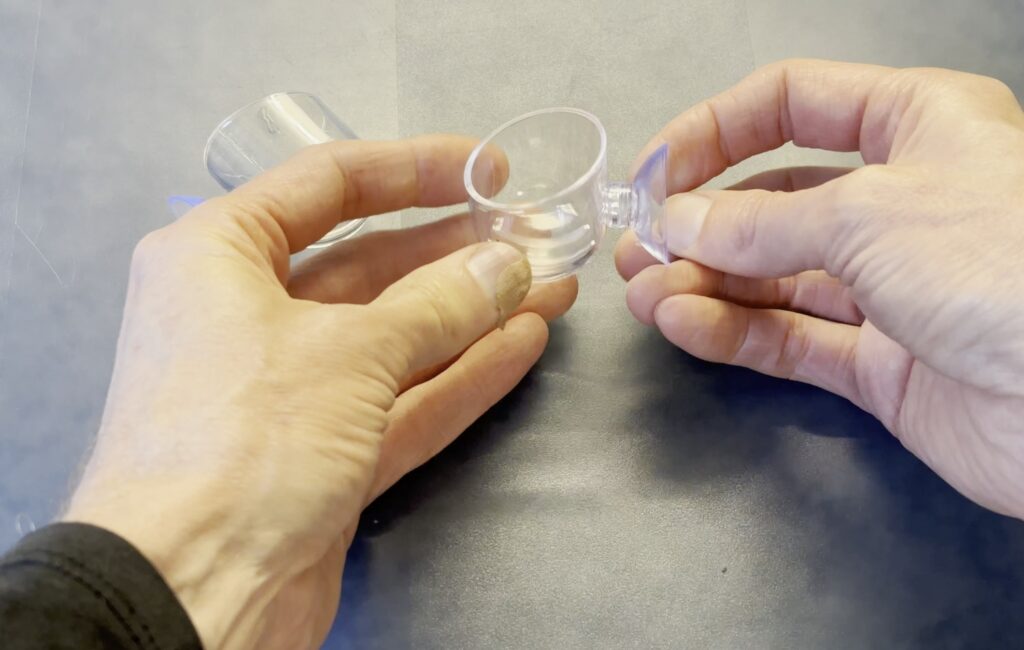
Find a plant holder to attach to the side of your aquarium. There are a whole range available on Amazon and eBay, but as these are nano plants, look for something small. Here’s a link to a set of five you can get on Amazon. They’re clear so that visually they’re unobrusive, with suction cups that make them easy to position and move in the tank.
Mini suction cup plant holders for aquarium https://amzn.to/3PMAbGC
Step 3
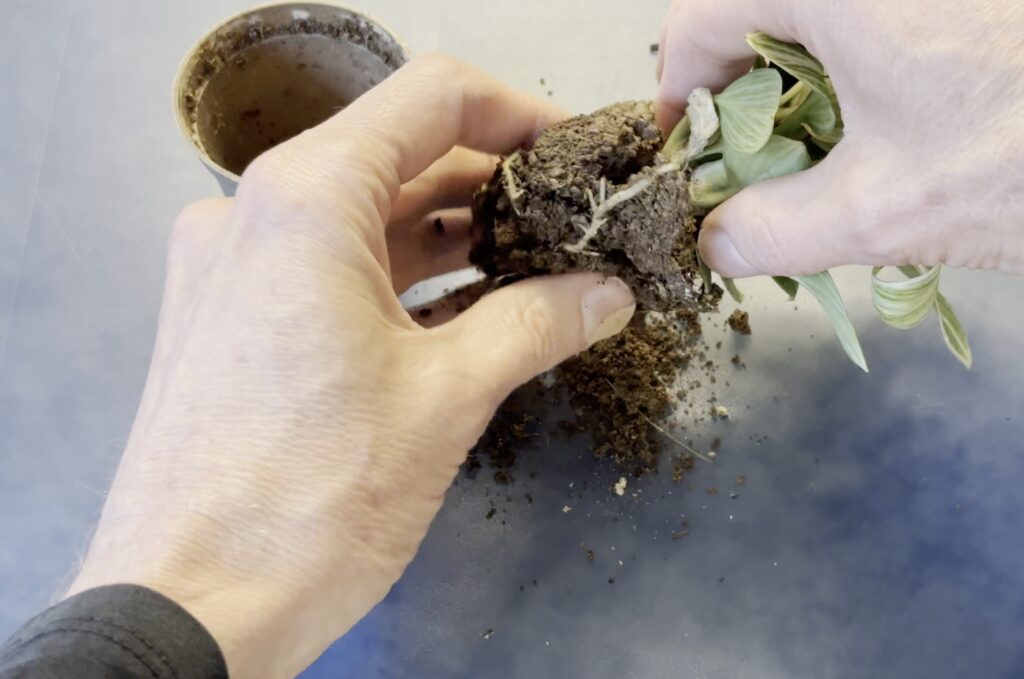
Carefully remove the soil from your plant over a tray. It’s a good idea not to water your plant for a few days beforehand, so the soil will be less sticky. Get rid of as much dirt as you can, including any white bits. These are usually vermiculate or another fertiliser, which you don’t want ending up in your tank.
Step 4
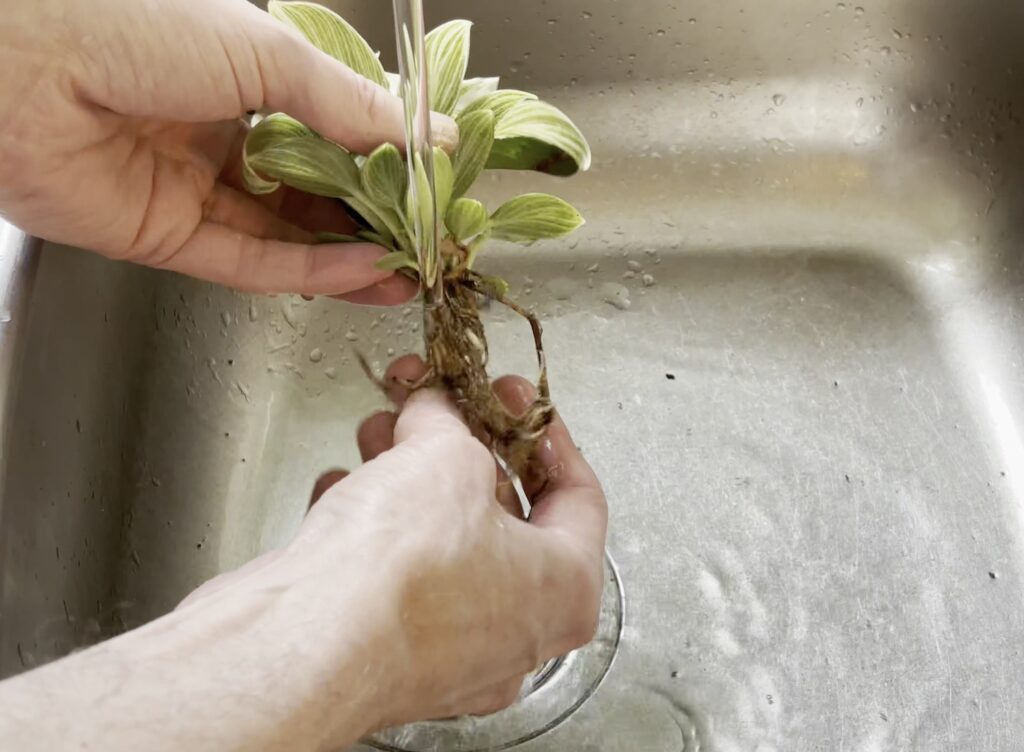
Then rinse the remaining dirt from the roots under the tap.
Step 5
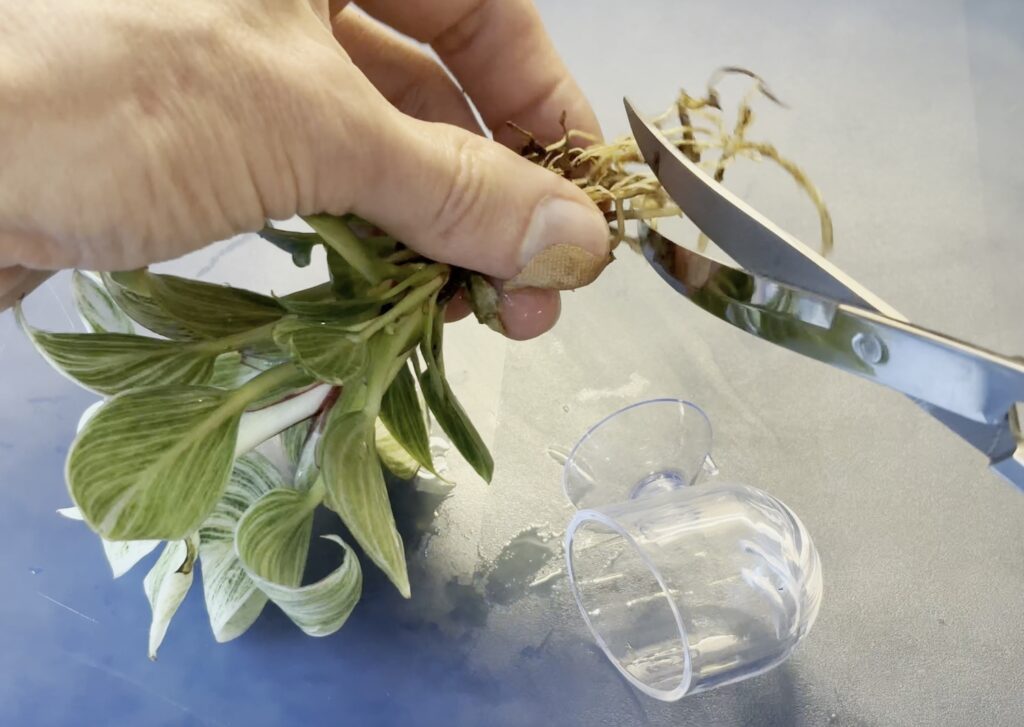
Trim the roots down to about one or two inches so that they’ll fit into your pot or plant holder device. This should have slots or holes in the bottom that the roots can eventually grow down through to trail into the water. Insert the plant into the holder and adjust it so it looks just right.
Step 6
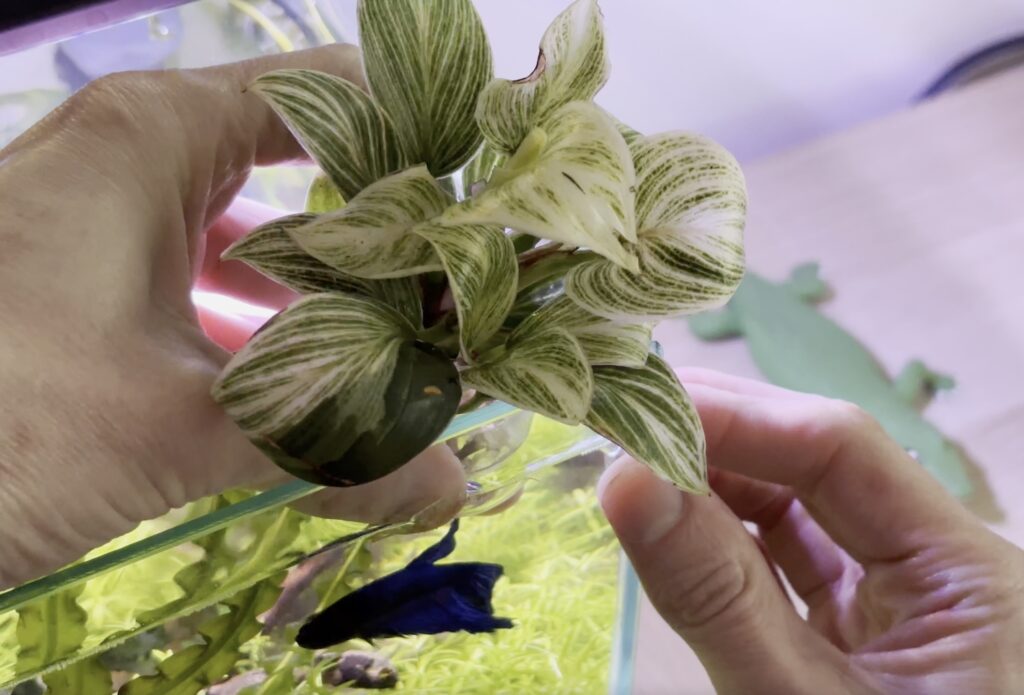
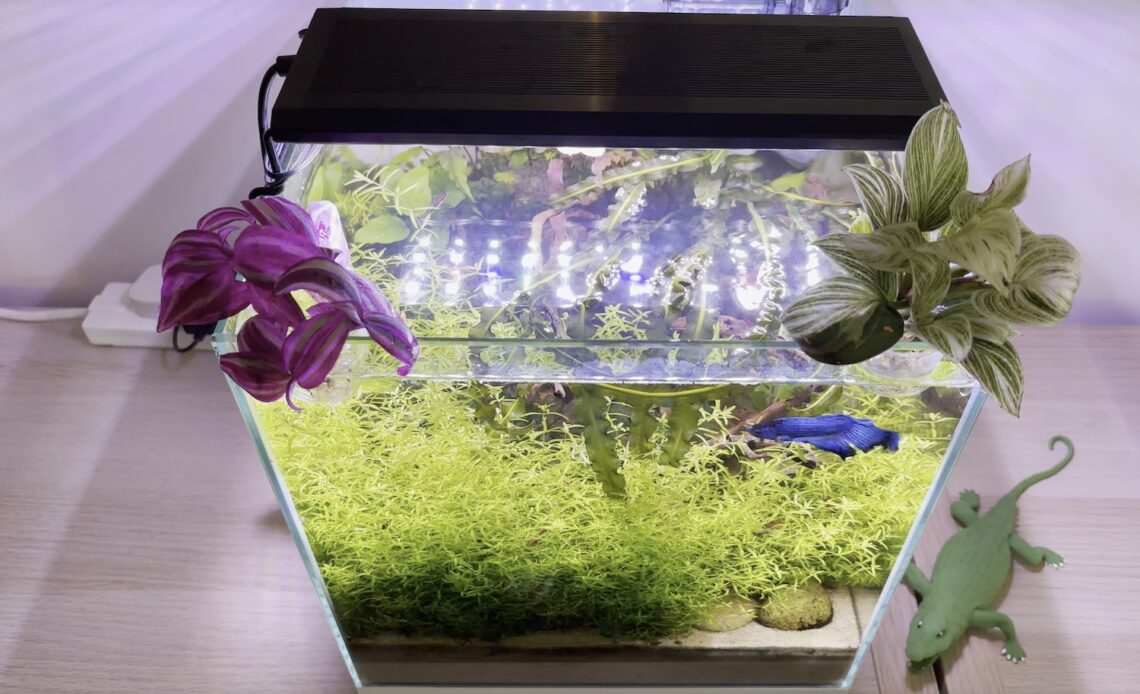
Position the plant in the tank. In my case, I was going to place my nano tradescantia and philodendron plants at the back. I don’t know – probably just because that’s what everyone does. But they look so great I immediately decided to put them at the front corners.
Step 7
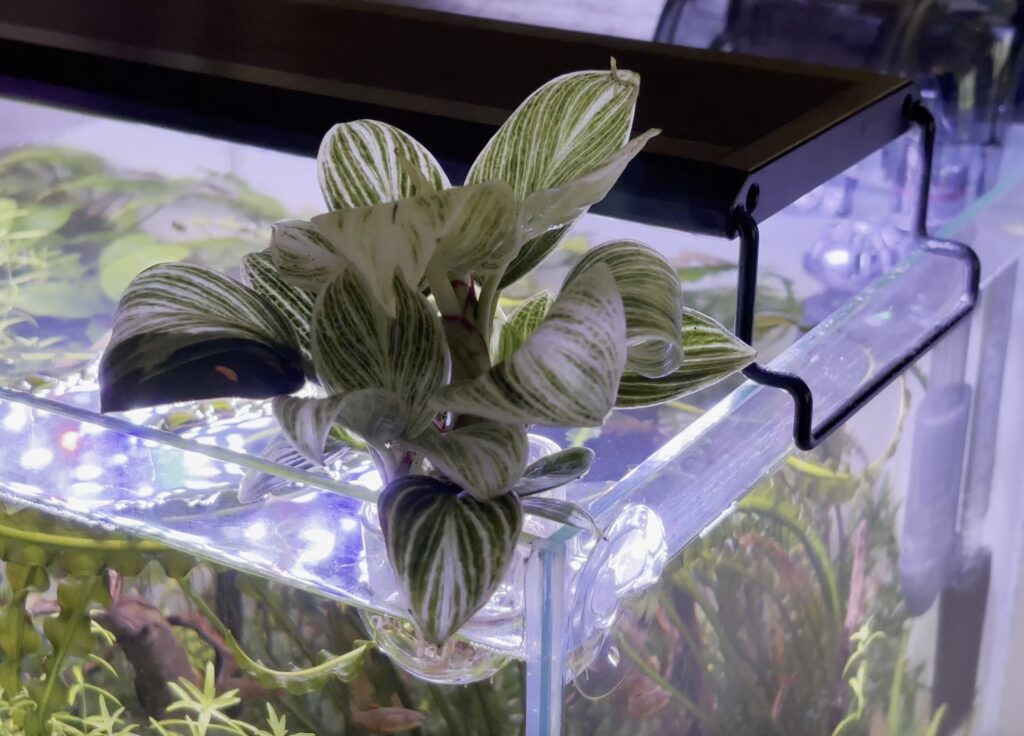
Finally, you need to make sure the leaves aren’t submerged in the water. Philodendron has a substance in its leaves that is toxic to fish. Tradescantia is non-toxic but even so if the leaves are submerged for a period of time they’ll start to rot, which is bad for your water quality.
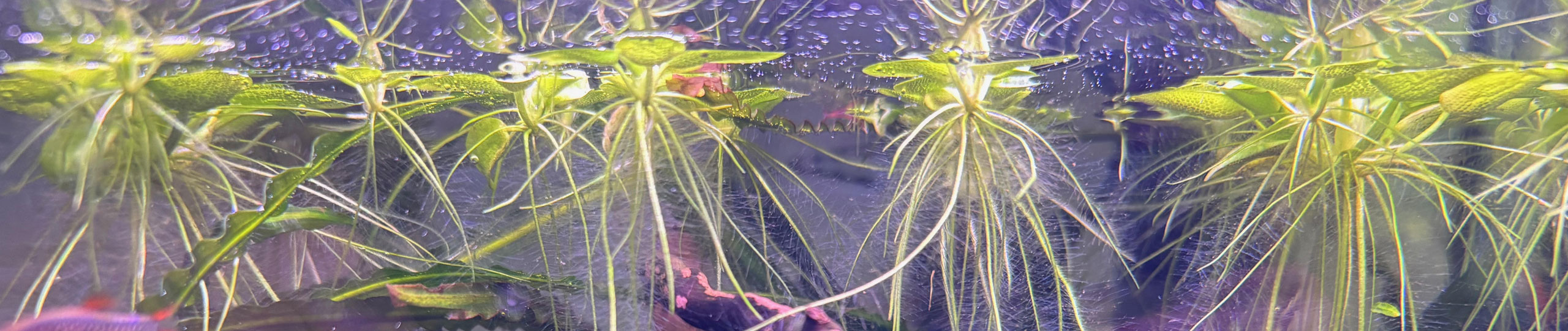
And that’s it. For me, adding these nano plants to my tank to absorb ammonia and nitrates gave me the opportunity to remove the floating frogbit, which was doing the same job, but was constantly getting overgrown, blocking light getting to the plants in the substrate, hindering water movement and sometimes rotting at the surface.
But most of all, I think the nano plants look great and add something to the aesthetic of my beautiful 22-litre living light cube aquarium.